

If you’ve noticed ChatGPT, Gemini, or Google’s AI Overviews answering questions directly instead of just linking to websites, you’re seeing generative engine optimization in action and it runs on different rules than classic SEO.
Table of Contents
AI search engines don’t just rank your page; they read it, break it into pieces, and decide whether a piece is clear enough to quote or summarize. Basically, make sure your content is written to be understood by a machine first, and a human second, without sacrificing either. Here’s what actually makes content easier for AI search engines to parse.
1. Answer-First Writing
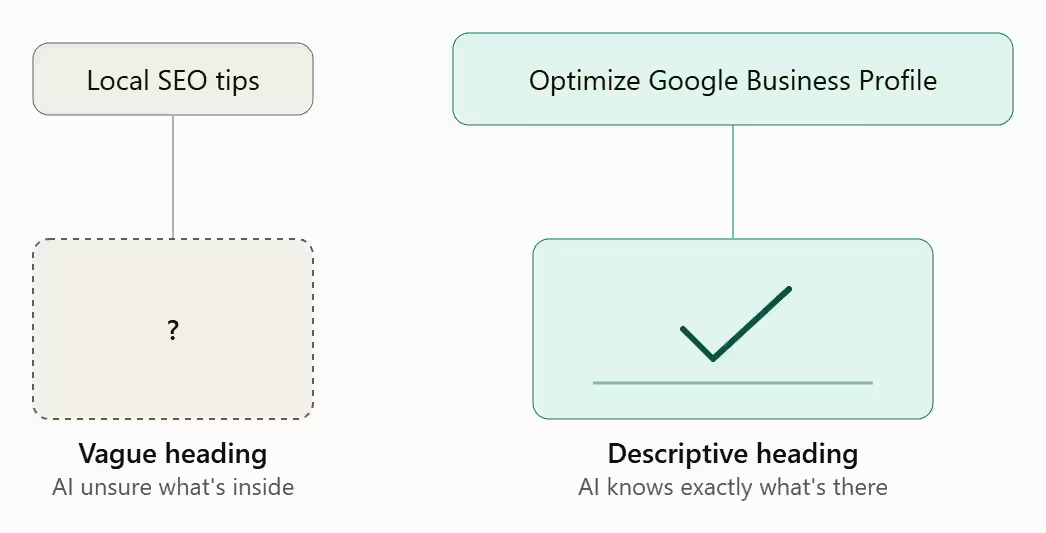
The first thing is to have clear, descriptive headings. AI systems use your headings as signposts to figure out what each section is about before they even read the content underneath. A heading like “Local SEO Tips” is generic; “How to Optimize Your Google Business Profile for Local Search” tells the AI exactly what it’s going to find.
Question-based headings work especially well, since they mirror how people actually phrase prompts to AI tools which is also why structuring content around how to appear in ChatGPT and Gemini starts with rethinking your headings before anything else.
2. Answer-First Writing
Don’t make the AI (or the reader) dig for the point. Put your answer in the first sentence or two of a section, then explain and support it afterward.
If someone asks “what is a backlink,” your first line should define a backlink not build up to it with three paragraphs of context. This “answer-first” format is one of the easiest ways to get a section lifted directly into an AI-generated response.
3. Clean, Logical Structure
AI systems read your HTML structure, not just your words proper headings (H2, H3), short paragraphs, and a logical flow from one idea to the next all help a model understand where one topic ends and another begins. This is really an extension of basic on-page SEO fundamentals that most sites already should be following, just applied with AI readability in mind.
4. Lists, Tables, and Comparisons
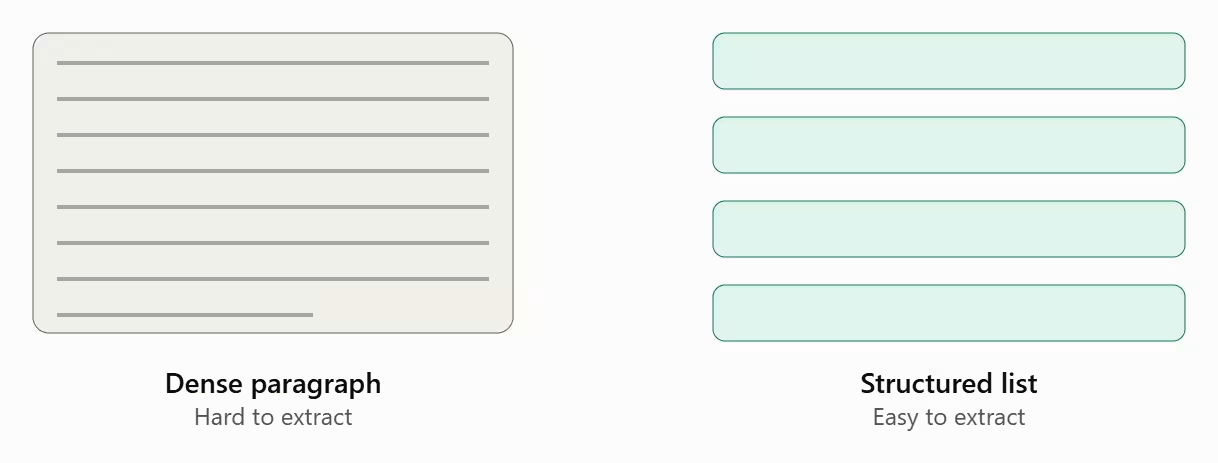
Bullet points, numbered steps, and comparison tables are far easier for AI models to extract and reuse than a dense paragraph covering the same information.
If you’re explaining a process, use numbered steps. If you’re comparing two options, use a short table. Structured formats translate almost directly into structured AI answers.
5. Schema Markup
Schema markup is code added to your website that tells search engines exactly what a piece of content is: a product, a review, an FAQ, an article, a person. It doesn’t change what readers see on the page, but it gives AI systems machine-readable context they can trust and act on.
If your site runs on WordPress, implementing schema markup is one of the more approachable technical upgrades you can make, even without a developer background.
6. One Clear, Consistent Topic Per Page
AI systems struggle with pages that try to cover too many unrelated ideas at once, or that repeat near-identical information across several pages on your own site. Each page should have one clear topic.
If two of your pages are competing for the same idea, it confuses both traditional rankings and AI retrieval which is exactly the kind of problem covered in fixing duplicate content and canonical issues.
7. Strong Internal Linking
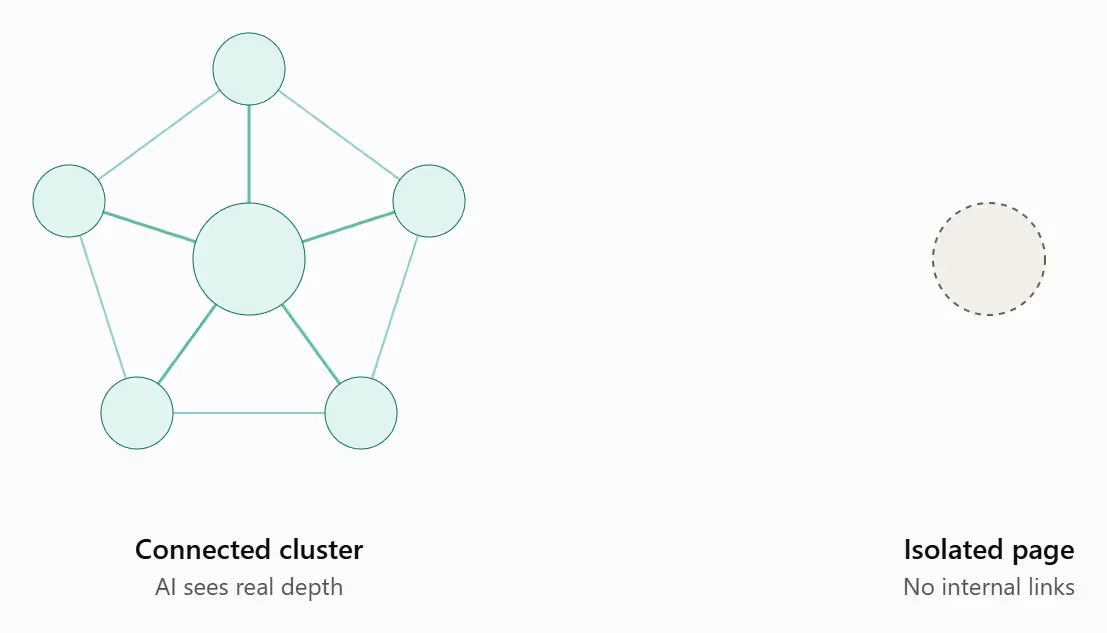
Internal links help AI systems understand how your content connects which pages support each other, and which topics you have real depth in. A page that stands completely alone, with no links in or out, looks thinner to an AI system than one that’s clearly part of a connected cluster of related content.
8. Technical Crawlability

None of the above matters if AI crawlers can’t actually access and render your page in the first place. Site speed, clean code, and proper indexing all affect whether your content even gets seen. If you’re not sure where your site stands technically, running through a technical SEO guide is a good starting point, and understanding how Google indexing works explains why some pages get picked up quickly while others get missed entirely.
9. Evidence and Specificity
Vague, generic statements don’t carry much weight with AI systems. Specific numbers, named examples, and clearly sourced claims are treated as more trustworthy and are more likely to get cited directly. “Many businesses struggle with SEO” is forgettable; “68% of local searches lead to a store visit within 24 hours” is the kind of specific, checkable detail that gets pulled into an answer.
AI search engines reward the same things that make content genuinely useful to a human reader: clarity, structure, and real substance just with a stronger emphasis on machine-readability.
Clean up your headings, lead with your answers, add schema where it makes sense, and keep your topics focused, and you’ll naturally become easier for both AI systems and your actual readers to understand.
Structuring content this way isn’t something you figure out from a single blog post, it’s a skill, and one that keeps shifting as AI search evolves. If you want to actually get hands-on with technical SEO, schema, and content structuring instead of just reading about it, our SEO training course in Mohali covers all of this with real websites and live practice, not just theory.
Frequently Asked Questions (FAQs)
What does it mean to structure content for AI search?
It means organizing your content with clear headings, answer-first writing, logical flow, and scannable elements like lists and tables, so AI systems can parse, understand, and extract key information easily.
Does schema markup really help with AI search visibility?
Yes. Schema markup gives search engines and AI systems machine-readable context about your content, what it is, who wrote it, and how it relates to other entities which makes it easier to interpret and cite accurately.
Why do headings matter so much for AI search engines?
Headings act as signposts that tell an AI system what each section covers before it reads the content itself. Clear, specific, question-based headings make it much easier for AI to match your content to a user’s question.
Does my content need to be a certain length to perform well in AI search?
No. Length by itself isn’t a ranking or citation factor. What matters more is clarity, structure, and whether the content directly and specifically answers the question being asked.
Is optimizing for AI search different from traditional SEO?
They overlap a lot, but AI search puts more weight on machine-readability, clean structure, schema, and answer-first writing while traditional SEO leans more on keywords and backlinks. Good technical and on-page SEO is still the foundation either way.