Table of Contents
- Introduction to Technical SEO
- What is Technical SEO and Why Does It Matter?
- Website Speed Optimisation — The Background
- Core Web Vitals — The Page Experience Signals of Google
- Schema Markup — Guide Google on Your Content
- Site Architecture, Crawlability and Indexability
- Mobile-First Indexing and HTTPS
- Technical SEO Audit — How to begin
- Why the technical SEO skills will be on demand in 2025
- Conclusion
- Frequently asked questions (FAQs)
Introduction to Technical SEO
When you have ever wondered why you have even had a page that is well-written, completely fails to rank within Google, most of the time the reason is hiding under the hood, in the technical foundation of the site. The wheels that drive your content strategy are technical SEO. It is important to such an extent that it makes sure that your pages could be found, crawled, understood and ranked by your search engines effectively. The greatest content remains unseen without it.
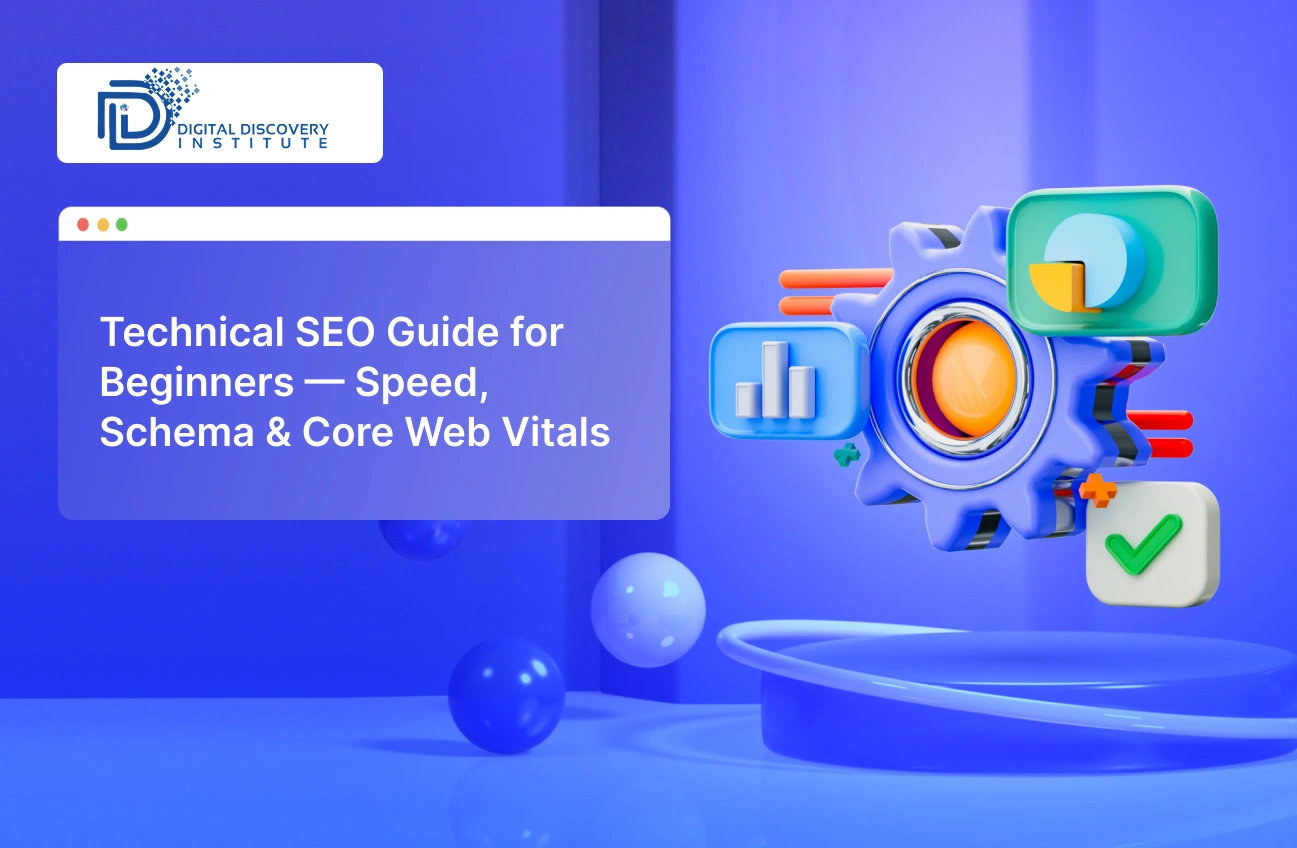
This guide is aimed at beginners wanting to learn about three most important pillars of technical SEO: millionaires tend to optimise the speed of websites, schema markup (structured data), and Core Web Vitals. By the time you are done with this article you will learn what all this really entails, why Google is so concerned with all this and what you can actually do at this moment.
The entire course in search engine optimisation is taught at our uniquely complete SEO course in Mohali (including all of these subjects with project training) or our course in SEO in Chandigarh at DDI.
DDI Mohali Knowledge of Technical SEO with Live Projects.
The most realistic SEO course in India- get enrolled in the course and join 1,000 other students who have been placed in the leading companies.
What is Technical SEO and Why Does It Matter?
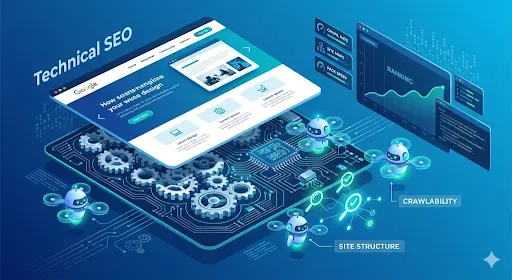
This is the practice of ensuring that your site infrastructure is optimised to allow it to be properly crawled, indexed and ranked by the search engines. Technical SEO is focusing on the health and structure of the site, and does not require key words and content (as in on-page SEO) or backlinks (as in off-page SEO).
What is the meaning of technical SEO?
- Accessibility of the site to the crawler, is Googlebot able to crawl your site?
- Indexability — Does Google have your pages in its index?
- Site speed and Core Web Vitals — how quick and reliable does your page load?
- Structured data (schema markup) — does Google know what is on your site?
- Mobile-first optimisation — is your site optimised perfectly to work on mobile devices?
- Typically, let’s not forget about the security of HTTPS anyone would ask.
- Canonical tags — are you preventing duplication of content?
- XML sitemap, robots.txt: do you correctly guide crawlers?
At DDI Mohali, we cover all these elements hands-on in our digital marketing course in Mohali. The students use live websites and complete real technical SEO audits with the assistance of such tools as Google Search Console, Screaming Frog, and Semrush.
Website Speed Optimisation — The Background
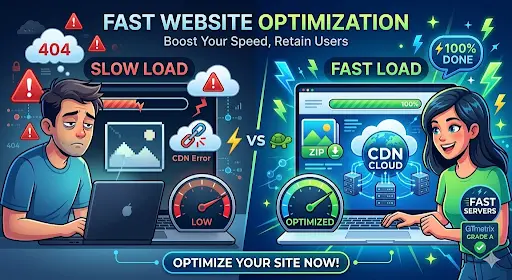
Among the factors of direct ranking that Google has confirmed to publicly, page speed is on the list of speed. Slow Web site lose users, conversions decrease and bad signals to search engines. According to Google statistics, the longer the time to load a page takes (one second to ten seconds), the more likely the user is to bounce.
Significant reasons of slow websites
- Large images (without converting to WebP) of uncompressed format (JPEG/PNG files).
- Serve JavaScript and CSS block files in page head.
- Server having no browser caching.
- No CDN (Content Delivery Network) to world users.
- Cheap shared hosting and slow Time to First Byte (TTFB).
- Excessive HTTP requests by unminified CSS files, JavaScript files and fonts.
Measurements of your site speed
Google PageSpeed Insights (pagespeed.web.dev) and GTmetrix are the two major free tools. They both provide you with a mobile and desktop score out of 100, and detailed diagnostics.
During our digital marketing analytics course at DDI, students get to know how to read such reports, what the bottlenecks are, and how to fix them, including not only changing server-side to achieve the intended performance but also compressing images and using lazy loading.
Beginner checklist: Speed optimisation checklist.
- Turn all pictures into WebP and reduce their size (when possible) to less than 100 KB.
- Turn on GZIP/Brotli compression on server.
- Compress CSS, JavaScript and HTML files.
- JIT render blocking scripts to the bottom or load them asynchronously.
- Cache browser using the expires of at least a week.
- Deploy a CDN system such as Cloudflare to deliver resources at the edge nodes.
- Lazy load images and videos below the fold.
Core Web Vitals — The Page Experience Signals of Google
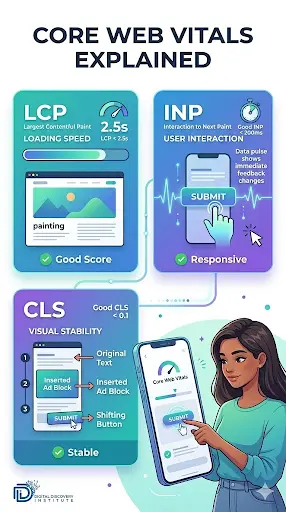
Core Web Vitals are three unique measures that Google applies to identify the real-world user experience of a page. These signals have been listed in the ranking algorithm of Google since the Page Experience Update of 2021.
The three Core Web Vitals are: LCP (Largest Contentful Paint) — loading performance. Target: under 2.5 seconds. INP (Interaction to Next Paint) — puts a check on interactivity responsiveness. Target: under 200 ms. CLS (Cumulative Layout Shift) — measures visual stability. Target: below 0.1. |
LCP — Largest Contentful Paint.
LCP is a measure of the duration the biggest visible object on the page (typically a hero image or an H1 heading) takes to load. Slow LCP signifies that Google is losing the customers, who have to wait too long before they can see anything meaningful.
Fix: Preload your hero image with the HTML preload linking tag. Make sure your server is fast (TTFB less than 600 ms). Deliver next-generation image formats.
INP — Interaction to Next Paint.
INP replaced FID (First Input Delay) in March 2024 as a Core Web Vital. It quantifies the responsiveness of pages to all user interaction (clicks, taps, keyboard type) over the entire lifecycle of the page and not necessarily only the initial page.
Fix: Reduce long JavaScript activities. Divide extensive scripts into small bits. Heavy third-party scripts which block the main thread should be avoided.
CLS — Cumulative Layout Shift.
CLS is a measurement of the amount of visible content on a page which moves unpredictably during loading. When the CLS is high, the buttons and text communicate in a jerky fashion as the images and advertisements are loaded — extremely frustrating to the user.
Fix: It is advisable to make width and height attributes specific to the images and video embeds. CSS aspect-ratio or fixed dimensions: reserve space and use dynamic content and ads.
Monitoring all 3 of the Core Web Vitals of your site is a real time feature of the Google Search Console under the ‘Core Web Vitals’ report. Our AI-based SEO guide also discusses the issue of technical audits and how AI-based tools are speeding up and improving the accuracy of these tasks.
Feel like perfecting Core Web Vitals and Speed Optimisation?
Use the SEO course of DDI — practical learning about Google Search Console, PageSpeed Insights, etc.
Schema Markup — Guide Google on Your Content
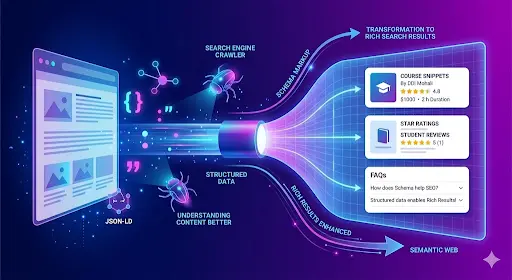
Schema markup (also known as structured data) is markup you can place on your web pages to make it easier to determine the context and meaning of what is on a web page: not only the words, but what the words are about.
In fact, in a real-life example, by publishing a recipe you are using Google: ‘This is a Recipe the author is X, the cooking time is 30 minutes, the ratings are 4.8 stars’. This information can then be provided as a rich snippet in visual form by Google in search results, and this increases exponentially the click-through rates (CTR).
Most useful types of schema markup.
- Article schema — Blog posts and news articles have similar article schema.
- LocalBusiness schema — important in local SEO (particularly in the case of DDI Mohali).
- FAQ schema — This adds collapsible Q&A sections to Google search results.
- Course schema — perfect to include course information in SERP as per educational institutes.
- BreadcrumbList schema — enhances the site navigation display of search results.
- Review / AggregateRating schema — shows star ratings in the results.
- HowTo schema — stepwise material of an instructional character.
How to apply schema markup (JSON-LD approach)?
Google suggests the JSON-LD (JavaScript Object Notation of Linked Data) format to be used and it is included as a script block in the head section of the HTML.
To enable schema markup to be added in WordPress, you do not have to write any code, and this is why Rank Math SEO or Yoast SEO Premium are a great place to start as a beginner.
To learn how schema markup integrates with the overall local SEO plan, read our article on the critical aspects in order to rank in local SEO. The most potent and local ranking combination to use is local Business schema with Google Business Profile optimisation.
Site Architecture, Crawlability and Indexability
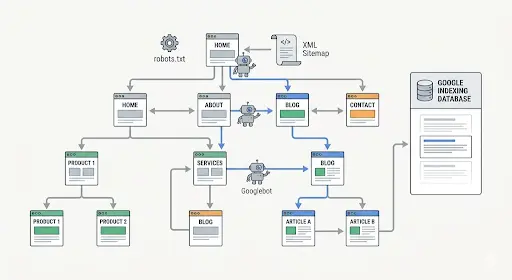
The Googlebot has to find and read your pages before any of the above issues. This is controlled by two vital files:
Robots.txt
The robots.txt file is located at the top of your domain (yoursite.com/robots.txt) and is an instructional note given to the search engine crawlers on which pages or directories they may access. One of the most common and harmful SEO errors is blocking the incorrect pages in this file: it may result in Google not providing an index to the most significant pages.
XML sitemap
XML sitemap is a document that contains a compilation of all the pages that you wish Google to crawl and index. Place it in Google Search Console, in the sitemaps section. Yoast or Rank Math can automatically generate sitemaps in WordPress sites. In the case of DDI Mohali the blog, our sitemap can be found at the digitaldiscovery.institute/blog/post-sitemap.xml — it has been submitted and is kept checked.
Canonicalisation
When the identical information can be found on more than one URL (e.g. with and without the use of the www, with different parameters in the query), use the canonical element to inform Google of which is the authoritative one. This helps to avoid having the same content dividing your ranking signals.
To truly understand what site structure has to do with rankings, our digital marketing course in Punjab includes the entire technical and strategic SEO image as a complete part of a broad-based curriculum.
Mobile-First Indexing and HTTPS

In a change called mobile-first indexing, Google is now utilizing the mobile version of your site as the primary one in ranking. This implies that, when your desktop site contains quality content but your mobile site is slow or lacks your ranking will be affected.
Mobile SEO checklist
- Have a design that is responsive to any screen size.
- Make font sizes on small screens (at least 14px) legible.
- Make tap targets (buttons, links) 48px high.
- Stay away of mobile pop-ups that obstruct the content.
- Use Google Mobile-Friendly Test to test your site.
On HTTPS: HTTPS (SSL certificate) was announced by Google as a ranking signal as early as 2014. Any website of today has to operate under HTTPS. When your site continues to display the HTTP in the point of address, you are losing signals of trust and possibly even rankings. Let’s Encrypt provides free SSL certificates, along with most modern hosting companies.
Technical SEO Audit — How to begin
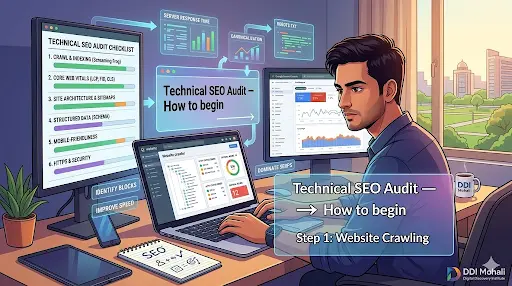
Technical audit of SEO is a step-by-step analysis of the health of your site. Below is an approach to an audit which is friendly to a beginner:
- Google Search Console Run — get crawl errors, coverage, and Core Web Vitals.
- Consider PageSpeed Insights — determine LCP, INP, and CLS scores both mobile and desktop.
- Crawl your site with Screaming Frog (free up to 500 URLs) — use it to find something wrong, like broken links, missing meta tags, duplicate content and redirect chains.
- Validate structured data using the Rich Results Test of Google — confirm that the schema can be used as a rich snippet.
- Test robots.txt and sitemap — make sure you have not block anything out of important pages and have submitted the sitemap.
- HTTPS audit — check that all pages are using HTTPS and are redirecting to the secure variant with HTTPS.
Wish to know how to professionally do full technical audits? SEO training in Punjab and SEO training DDI specialisation incorporate practical audit homework, making students practice on actual websites — not textbook tasks.
Why the technical SEO skills will be on demand in 2025.
One of the most generalized and the most paid digital marketing skills is technical SEO. The majority, and even most, content creators and social media marketers are familiar with the basics of on-page, but extremely few professional-level practitioners are aware of how to audit site architecture, how to resolve crawl budget problems or how to deploy JSON-LD schema on a grand scale.
When you have acquired technical SEO skills you will be indispensable in any agency or in-house team. In India, the mean rate of a technical SEO specialist is between 4.5 LPA up to 14 LPA, depending on experience. Discover new insights on digital marketing remunerations in DDI career guide in digital marketing.
Other technologies transforming SEO, such as the Search Generative Experience (SGE) by Google and the Bing Copilot, also exist, however, technical principles form a foundation. To know what we can do to remain relevant, read our point of view in the rise of AI in SEO.
Begin Your Technical SEO journey with DDI Mohali
Industry experts. Real projects. 100% placement support. Batches starting monthly.
Conclusion
The technical aspect of SEO is not something that you leave out in 2025 — it is the basis within the context of which all other SEO practices are built. The best content will fail to copy without a fast, crawlable, structured and mobile friendly site.
As a beginner, begin with the basics: run your site through Google PageSpeed Insights, see your Core Web Vitals in Search Console, add one FAQ schema to your homepage, and ensure that a sitemap is submitted and your robots.txt is neat. These five steps will deliver a tangible change in your rankings in 30–60 days.
In Phase 8B of the Digital Discovery Institute (DDI), Mohali, students are taught to master both technical SEO and all other aspects of digital marketing such as keyword research to Google Ads to analytics. Our Mohali SEO training is not based on the theory but on actual industry experience. When you mean business when it comes to a career in SEO, we would be glad to have you, in our next batch.
Frequently Asked Questions
What is technical SEO?
Technical SEO involves optimizing the infrastructure of your web site; the speed, crawlability, and indexing and structured data and security, such that search engines can effectively access and rank your content.
What are Core Web Vitals?
Core Web Vitals are a set of three metrics of page experience created as ranking criteria by Google: LCP (loading speed), INP (interaction responsiveness), and CLS (visual stability). Google suggests LCP below 2.5s, INP below 200ms and CLS below 0.1.
What do I need to do to increase the LCP score of my site?
Image preload, invest in a faster host (reduce TTFB), WebP image and remove render-blocking. The largest LCP improvements are usually achieved by these changes.
What is schema markup, and its importance?
The schema markup is a type of data (typically a JSON-LD code) that is included in web pages to help Google interpret the meaning of your data. It has the ability to release rich snippets in the search results, star ratings, F.A.Q. dropdowns, course information that increase the click-through rate by up to 30%.
How are crawling and indexing related?
Crawling occurs when one of the pages is read by Googlebot. The process of indexing is when Google adds that page to its database and qualifies to be presented in search results. A noindex tag or thin content can also cause a page to be crawled but not indexed.
Which tools am I required to have in the case of a technical SEO audit?
Free: Google Search Console, Google PageSpeed Insights, Screaming Frog SEO Spider (up to 500 URLs free), and the Rich Results Test by Google (free). Semrush, Ahrefs or DeepCrawl are used as advanced audits.
What is the impact of mobile-first indexing on my SEO?
Google mostly relies on the mobile version of your site in ranking. A slower mobile site, missing content, and/or bad navigation compared to your desktop site will end up hurting your rankings on all devices.
Does it need the knowledge of coding to study technical SEO?
Yes. A lot of technical SEO cleanups may be performed with the help of a plugin (Rank Math, Yoast) or WordPress settings or through your hosting control panel. Nevertheless, only basic knowledge of HTML, CSS and browser rendering will make you much more efficient. This is discussed in DDI SEO course in an easy to understand manner.
What is the duration of obtaining the result of technical SEO improvement?
The majority of technical fixes (important: speed and Core Web Vitals) demonstrate visible changes within 30–60 days when Googlebot re-crawls your updated pages, after implementing changes. Significant organizational transformation may take 2–3 months before it is totally highlighted in rankings.
Do you offer technical SEO on courses at DDI Mohali?
Yes. The SEO course at Mohali by DDI will implement the entire technical SEO course excluding the content auditing lesson: site audits, Core Web Vitals, schema markup, crawlability, robots.txt, sitemaps, mobile-first indexing, and speed optimisation — all hands-on work on a real-world project. Dates, including the syllabus and future batch dates can be viewed at digitaldiscovery.institute.