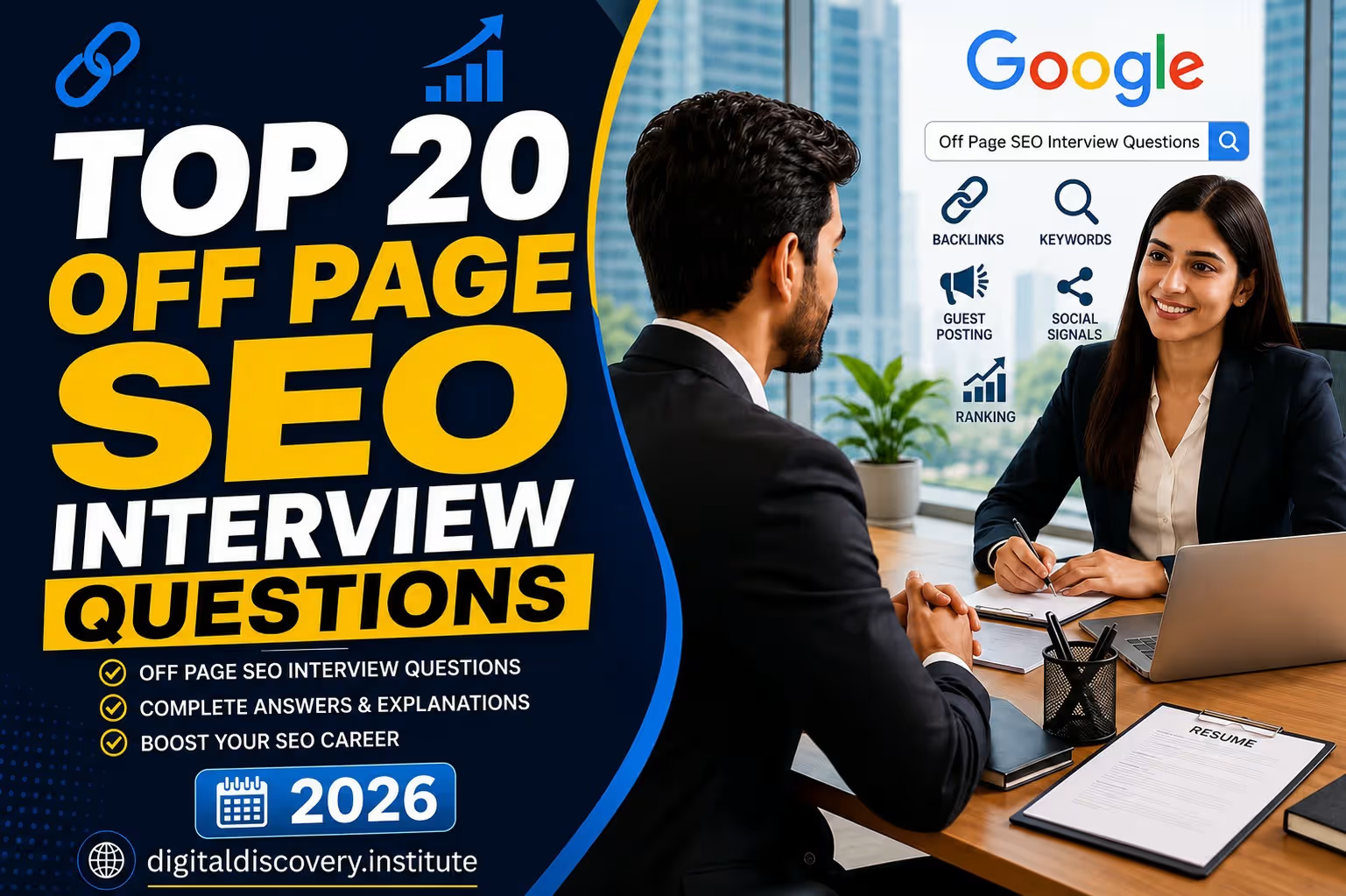
If you’re preparing for an SEO interview, learning Off-Page SEO is just as important as understanding On-Page SEO.
Most companies hiring SEO Executives, Digital Marketing Executives, and freshers ask questions about backlinks, link building, guest posting, domain authority, citations, and other off-page optimization techniques.
Interviewers want to know whether you understand how websites build authority and trust outside their own pages.
Unlike On-Page SEO, which focuses on optimizing elements within a website, Off-Page SEO is all about improving a website’s reputation, authority, and credibility through external factors. A strong Off-Page SEO strategy helps improve keyword rankings, drive referral traffic, and increase brand visibility across the web.
In this guide, we’ve compiled the 20 most frequently asked Off-Page SEO interview questions with beginner-friendly answers, practical examples, and interview tips.
If you’re learning SEO through our SEO Training Course or pursuing the Diploma in Digital Marketing, these questions will help you confidently prepare for your next interview.
If you’re new to SEO, we also recommend reading our Top 20 On-Page SEO Interview Questions article before continuing, as both topics work together to improve website rankings.
Table of Contents
- What is Off-Page SEO?
- Why is Off-Page SEO Important?
- What is the Difference Between On-Page SEO and Off-Page SEO?
- What is a Backlink?
- What are the Types of Backlinks?
- What is Link Building?
- What is Anchor Text?
- What is Domain Authority (DA)?
- What is Page Authority (PA)?
- What is a Referring Domain?
- What is a NoFollow Link?
- What is a DoFollow Link?
- What is a Broken Backlink?
- What are Toxic Backlinks?
- What is Google's Disavow Tool?
- What are Local Citations?
- What is Guest Posting?
- What is Social Bookmarking?
- What is Digital PR?
- What are the Best Off-Page SEO Techniques?
1. What is Off-Page SEO?
Answer:
Off-Page SEO refers to all the activities performed outside your website to improve its authority, trust, and search engine rankings.
It mainly includes building backlinks, brand mentions, social media promotion, guest posting, local citations, and digital PR. A strong Off-Page SEO strategy tells search engines that other websites trust your content, making it more likely to rank higher.
If you’re new to SEO, start by learning the fundamentals through our SEO Training Course. Before diving into Off-Page SEO, you should also understand On-Page SEO, as both work together to improve rankings.
Example:
When a popular marketing website links to your blog, Google considers it a positive trust signal.
Interview Tip: Remember, On-Page SEO builds relevance, while Off-Page SEO builds authority.
2. Why is Off-Page SEO Important?
Answer:
Off-Page SEO helps increase a website’s credibility and authority in search engines. High-quality backlinks and brand mentions act as recommendations, helping Google determine whether your website deserves to rank higher. It also drives referral traffic and improves online visibility.
If you’re planning to become an SEO professional, understanding both On-Page and Off-Page SEO is essential. Our Diploma in Digital Marketing covers practical SEO techniques using live projects.
Example:
Two websites have similar content, but the one with high-quality backlinks from trusted websites is more likely to rank higher.
3. What is the Difference Between On-Page SEO and Off-Page SEO?
Answer:
On-Page SEO focuses on optimizing elements within a website, such as content, title tags, headings, images, and internal links. Off-Page SEO focuses on activities outside the website, including backlinks, guest posting, social media marketing, and online reputation management. Both are important because one improves content quality while the other builds website authority.
For a complete understanding of website optimization, read our On-Page SEO Interview Questions Guide after finishing this article.
Example:
Writing an SEO-friendly blog is On-Page SEO, while earning a backlink from another website is Off-Page SEO.
4. What is a Backlink?
Answer:
A backlink is a hyperlink from one website to another. Search engines treat backlinks as votes of confidence, meaning that if trusted websites link to your content, your website is considered more reliable. However, quality matters more than quantity, so earning backlinks from authoritative websites is always better than collecting hundreds of low-quality links.
To understand how SEO works from start to finish, explore our SEO Training Course. You can also read our guide on Career Options in Digital Marketing to learn how backlink knowledge helps SEO professionals.
Example:
If a popular digital marketing blog links to your SEO article, that link is called a backlink.
5. What are the Types of Backlinks?
Answer:
The two primary types of backlinks are DoFollow and NoFollow backlinks.
DoFollow links pass SEO authority (also called link equity, link juice) and help improve search rankings, while NoFollow links usually don’t pass authority but can still generate referral traffic and improve brand visibility.
Besides these, you’ll also encounter editorial links, guest post links, profile backlinks, directory backlinks, business citations, social media links, and forum backlinks.
If you want to master backlink building strategies, our SEO Training Course provides practical experience with link-building campaigns. You can also continue learning through our SEO Training Mohali blog, where we share beginner-friendly SEO tips.
Example:
A guest post published on another website with a link to your blog is usually a DoFollow backlink, while many social media profile links are NoFollow.
Interview Tip: When asked about backlink types, first mention DoFollow and NoFollow, then discuss common backlink sources like guest posts, directories, profile links, editorial links, and business citations.
6. What is Link Building?
Answer:
Link building is the process of acquiring backlinks from other websites to improve your website’s authority and search engine rankings.
The goal is to earn high-quality links from relevant and trustworthy websites rather than collecting a large number of low-quality links.
A successful link-building strategy focuses on creating valuable content that people naturally want to reference and share.
To learn practical link-building strategies, explore our SEO Training Course. You can also read our blog Master Digital Marketing to understand how SEO fits into a complete digital marketing strategy.
Example:
Writing a helpful SEO guide that another marketing blog links to is an example of natural link building.
Interview Tip: Mention that quality is always more important than quantity when building backlinks.
7. What is Anchor Text?
Answer:
Anchor text is the clickable text used in a hyperlink. It helps users understand what the linked page is about and provides search engines with context about the destination page. Using descriptive and relevant anchor text improves SEO, while excessive keyword-rich anchors should be avoided.
If you’re learning keyword optimization, read our guide on Google Ads Keyword Planner to understand how keywords relate to anchor text. You can also practice these techniques in our SEO Training Course.
Example:
Instead of writing Click Here, use Learn SEO Training in Mohali as the anchor text.
8. What is Domain Authority (DA)?
Answer:
Domain Authority (DA) is a score developed by Moz that predicts how likely a website is to rank in search engines. The score ranges from 1 to 100, with higher scores generally indicating stronger authority. Although Google does not use DA as a ranking factor, SEO professionals often use it to compare websites and evaluate backlink opportunities.
If you’re planning to build a career in SEO, read our blog Career Options in Digital Marketing to learn about the skills employers look for.
Example:
A website with a DA of 70 is generally considered more authoritative than a website with a DA of 20.
Interview Tip: Mention that DA is a third-party metric created by Moz, not by Google.
9. What is Page Authority (PA)?
Answer:
Page Authority (PA) is another metric developed by Moz that estimates the ranking potential of an individual webpage rather than an entire website. Like Domain Authority, the score ranges from 1 to 100. PA is useful when comparing the strength of specific pages for backlink opportunities.
Understanding metrics like DA and PA helps you choose better websites for link building. These concepts are covered in our SEO Training Course.
Example:
A blog post with a PA of 60 is generally stronger than another page with a PA of 25.
10. What is a Referring Domain?
Answer:
A referring domain is a unique website that links to your website. Search engines value backlinks from multiple relevant websites more than many backlinks coming from the same domain. Increasing the number of quality referring domains can improve your website’s authority and organic rankings.
To understand how backlinks improve SEO performance, read our SEO Training Mohali blog. You can also continue learning through our Diploma in Digital Marketing, where you’ll work on real SEO projects.
Example:
If example.com links to your website five times, it still counts as one referring domain but five backlinks.
Interview Tip: Explain the difference clearly:
- Backlinks = Total number of links.
- Referring Domains = Number of unique websites linking to you.
11. What is a NoFollow Link?
Answer:
A NoFollow link is a backlink that contains the rel=”nofollow” attribute, telling search engines not to pass link authority (link juice) to the linked page. Although it may not directly improve rankings, it can still drive referral traffic, increase brand awareness, and diversify your backlink profile. Many social media sites, forums, and blog comments use NoFollow links.
To understand how different backlinks contribute to SEO, explore our SEO Training Course. You can also read our On-Page SEO Interview Questions guide to understand how On-Page and Off-Page SEO work together.
Example:
A link from your Facebook page to your website is usually a NoFollow link.
12. What is a DoFollow Link?
Answer:
A DoFollow link is the default type of backlink that allows search engines to pass authority from one website to another. These links help improve a website’s authority and can positively influence search rankings when they come from trusted and relevant websites. Quality DoFollow links are considered one of the strongest Off-Page SEO signals.
Learn practical link-building techniques in our SEO Training Course. You can also read our blog SEO Training Mohali to understand how quality backlinks improve rankings.
Example:
If a well-known marketing website links to your SEO guide without using the nofollow attribute, it is considered a DoFollow backlink.
Interview Tip: A few high-quality DoFollow links are much more valuable than hundreds of low-quality backlinks.
13. What is a Broken Backlink?
Answer:
A broken backlink is a link that points to a webpage that no longer exists or returns a 404 Page Not Found error. Broken backlinks create a poor user experience and waste valuable link equity. SEO professionals regularly monitor and fix broken links to maintain website performance.
Website audits are an important part of SEO. Our SEO Training Course teaches you how to identify broken backlinks using professional SEO tools.
Example:
If another website links to yourwebsite.com/seo-guide, but the page has been deleted, the backlink becomes broken.
14. What are Toxic Backlinks?
Answer:
Toxic backlinks are links from spammy, low-quality, or irrelevant websites that may negatively affect your website’s reputation. These backlinks are often created through black-hat SEO techniques, link farms, or automated software. Instead of helping rankings, they can increase the risk of search engine penalties.
To learn ethical SEO practices, explore our Diploma in Digital Marketing. You can also read our blog Career Options in Digital Marketing to understand the importance of following Google’s SEO guidelines.
Example:
Receiving hundreds of backlinks from unrelated gambling or spam websites may be considered toxic.
Interview Tip: Google values quality backlinks, not just a large number of links.
15. What is Google's Disavow Tool?
Answer:
Google’s Disavow Tool allows website owners to ask Google not to consider certain backlinks when evaluating their website. It is mainly used when a website has many harmful or spammy backlinks that cannot be removed manually. The tool should be used carefully because disavowing good backlinks can negatively impact SEO.
Advanced SEO topics like backlink audits and disavow files are covered in our SEO Training Course. As a beginner, focus first on earning quality backlinks naturally before worrying about disavowing links.
Example:
If your website receives thousands of spam backlinks from fake websites, you can submit those domains through Google’s Disavow Tool for review.
Interview Tip: Mention that the Disavow Tool should only be used when necessary and after attempting to remove harmful backlinks manually.
16. What are Local Citations?
Answer:
Local citations are online mentions of a business’s Name, Address, and Phone Number (NAP) on websites like business directories, Google Business Profile, Yelp, and Justdial. Consistent citations help search engines verify your business information and improve local search rankings. They are an essential part of Local SEO for businesses targeting specific locations.
To learn more about Local SEO strategies, read our Complete Local SEO Guide: Beginner to Advanced. You can also master these techniques in our SEO Training Course.
Example:
Listing your business on Google Business Profile, Justdial, and IndiaMART with the same business details creates local citations.
17. What is Guest Posting?
Answer:
Guest posting is the process of writing and publishing an article on another website in your industry. It helps you earn quality backlinks, reach a new audience, and build your personal or business brand. Guest posts should always be published on relevant and trustworthy websites.
Example:
Writing an SEO article for a popular marketing blog and linking back to your website is called guest posting.
Interview Tip: Focus on quality websites, not websites that sell backlinks.
18. What is Social Bookmarking?
Answer:
Social bookmarking is the practice of submitting webpages to bookmarking websites so users can discover, save, and share useful content. While most social bookmarking links are NoFollow, they can increase content visibility, referral traffic, and faster indexing of new pages. It also helps improve your online presence.
Example:
Sharing your latest blog post on Mix, Flipboard, or Pinterest is an example of social bookmarking.
19. What is Digital PR?
Answer:
Digital PR is the process of earning online mentions and backlinks from news websites, blogs, magazines, and other authoritative publications. It focuses on creating valuable content, press releases, research reports, or campaigns that journalists and publishers want to reference. Digital PR helps improve both brand awareness and SEO authority.
To understand advanced SEO and branding strategies, explore our SEO Training Course. You can also read our blog Career Options in Digital Marketing to learn how Digital PR benefits SEO professionals.
Example:
A news website publishes an article about your company and links to your website after covering your latest research.
20. What are the Best Off-Page SEO Techniques?
Answer:
Some of the most effective Off-Page SEO techniques include earning quality backlinks, guest posting, digital PR, local citations, business directory submissions, social media marketing, influencer outreach, brand mentions, and content marketing. The focus should always be on building genuine authority rather than creating spammy backlinks. Consistency and quality are the keys to long-term SEO success.
To learn these techniques practically, join our SEO Training Course or Diploma in Digital Marketing, where you’ll work on live projects and real websites. You can also continue learning through our blogs SEO Training Mohali and Master Digital Marketing.
Example:
Publishing a high-quality guide that earns backlinks naturally from industry websites is a much better strategy than buying hundreds of low-quality backlinks.
Interview Tip: Mention that Google rewards natural, relevant, and high-quality backlinks instead of artificial link-building techniques.
Final Interview Tips for Off-Page SEO
Before attending your SEO interview, make sure you can confidently explain the difference between On-Page SEO and Off-Page SEO. Understand how backlinks work, why quality matters more than quantity, and be familiar with common terms such as DoFollow, NoFollow, Domain Authority, Anchor Text, Guest Posting, and Local Citations. If you’ve practiced creating backlinks for your own website or a demo project, don’t hesitate to mention it during the interview as it demonstrates practical experience.
Conclusion
Off-Page SEO plays a vital role in improving a website’s authority, credibility, and search engine rankings. By understanding these 20 essential Off-Page SEO interview questions, you’ll be better prepared to explain key concepts and confidently answer questions during your interview. Remember, interviewers are not looking for someone who has memorized definitions—they want candidates who understand the concepts and can apply them in real-world SEO projects.
To become job-ready, practice building quality backlinks, optimize a Google Business Profile, explore guest posting opportunities, and learn to use professional SEO tools like Google Search Console, Ahrefs, and SEMrush. Hands-on experience will always give you an advantage over candidates who only know the theory.
If you’re serious about starting a career in SEO, join our SEO Training Course or Diploma in Digital Marketing at Digital Discovery Institute. Our practical training includes live projects, AI-powered SEO strategies, interview preparation, industry-recognized tools, and placement assistance to help you launch your digital marketing career with confidence.
Looking to continue learning? Don’t miss our Top 20 On-Page SEO Interview Questions guide, and explore more expert resources on the Digital Discovery Institute Blog to stay updated with the latest SEO trends, Google algorithm updates, and digital marketing strategies.
We wish you all the best in your SEO interview and your journey toward becoming a successful SEO professional!