If you’re preparing for your first SEO interview, one of the most important topics you’ll be asked about is On-Page SEO. Whether you’re applying for an SEO Executive, Digital Marketing Executive, Content Writer, or Digital Marketing Intern position, interviewers expect you to understand the basics of optimizing web pages for search engines.
The good news is that most companies don’t expect freshers to know advanced SEO strategies. Instead, they look for candidates who understand the fundamentals, can explain concepts in simple words, and know how to optimize a webpage for users as well as search engines.
In this guide, we’ve compiled the 20 most commonly asked On-Page SEO interview questions with beginner-friendly answers, practical examples, and interview tips. If you’re learning SEO through our SEO Training Course or pursuing the Diploma in Digital Marketing, these questions will help you build confidence before your interview. You can also explore more free learning resources on the Digital Discovery Institute Blog.
Table of Contents
- What is On-Page SEO?
- What is the difference between On-Page SEO and Off-Page SEO?
- Why is On-Page SEO important?
- What is a Title Tag?
- What is a Meta Description?
- What are Header Tags?
- What is URL Optimization?
- What is Keyword Density?
- What are Internal Links?
- What are External Links?
- What is URL Optimization?
- What is Alt Text?
- What is Keyword Cannibalization?
- What are Canonical Tags?
- What is Duplicate Content?
- What is Schema Markup?
- What is Page Experience?
- What are Core Web Vitals?
- What is Local SEO?
- What are the most important On-Page SEO ranking factors?
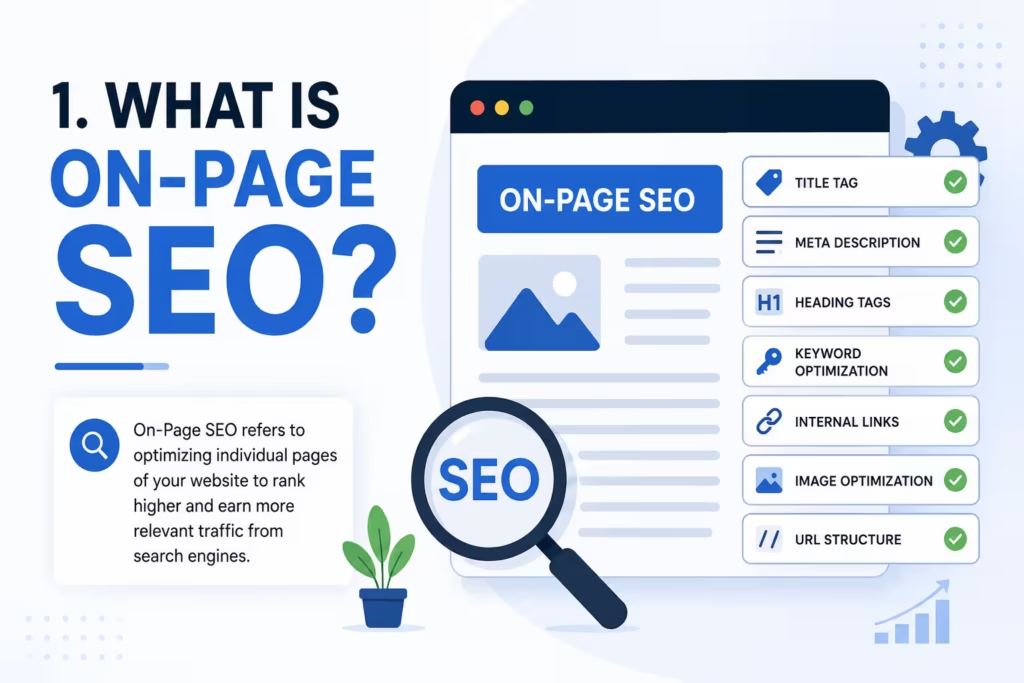
1. What is On-Page SEO?
Answer:
On-Page SEO refers to the process of optimizing individual web pages to improve their rankings on search engines like Google. It includes optimizing titles, headings, content, URLs, images, internal links, and HTML elements.
The primary goal is to help search engines understand your content while providing a better experience for users. Good On-Page SEO increases your chances of ranking for relevant keywords.
Example:
If you write a page about “Digital Marketing Course in Mohali,” you would optimize the title tag, headings, images, URL, and content around that topic.
Interview Tip: Mention that On-Page SEO focuses on elements inside the website, unlike Off-Page SEO.
2. What is the difference between On-Page SEO and Off-Page SEO?
Answer:
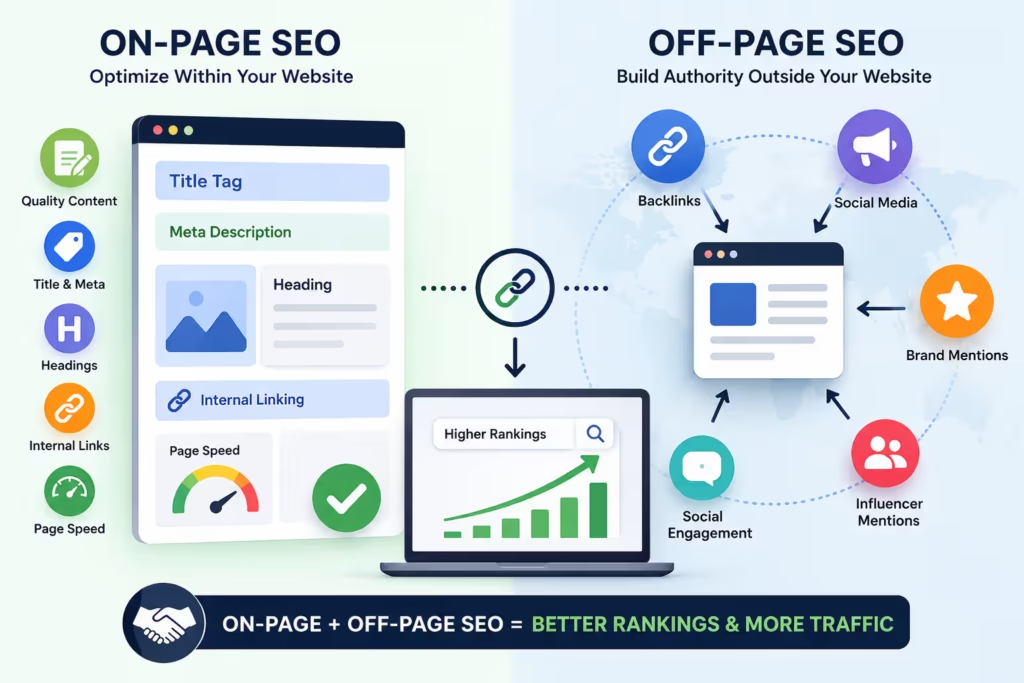
On-Page SEO includes all optimization activities performed within a website, such as improving content quality, title tags, meta descriptions, headings, internal linking, and page speed.
Off-Page SEO involves activities performed outside the website to build authority, including backlinks, social media promotion, and brand mentions. Both work together to improve search rankings.
Example:
Optimizing a page title is On-Page SEO, while getting a backlink from another website is Off-Page SEO.
3. Why is On-Page SEO important?
Answer:
On-Page SEO helps search engines understand what your webpage is about. It also improves user experience by making content easy to read, navigate, and access. Proper optimization increases organic traffic, improves rankings, and encourages visitors to stay longer on your website.
Companies hiring SEO freshers often ask this question because it shows whether you understand the purpose of SEO beyond keywords.
Example:
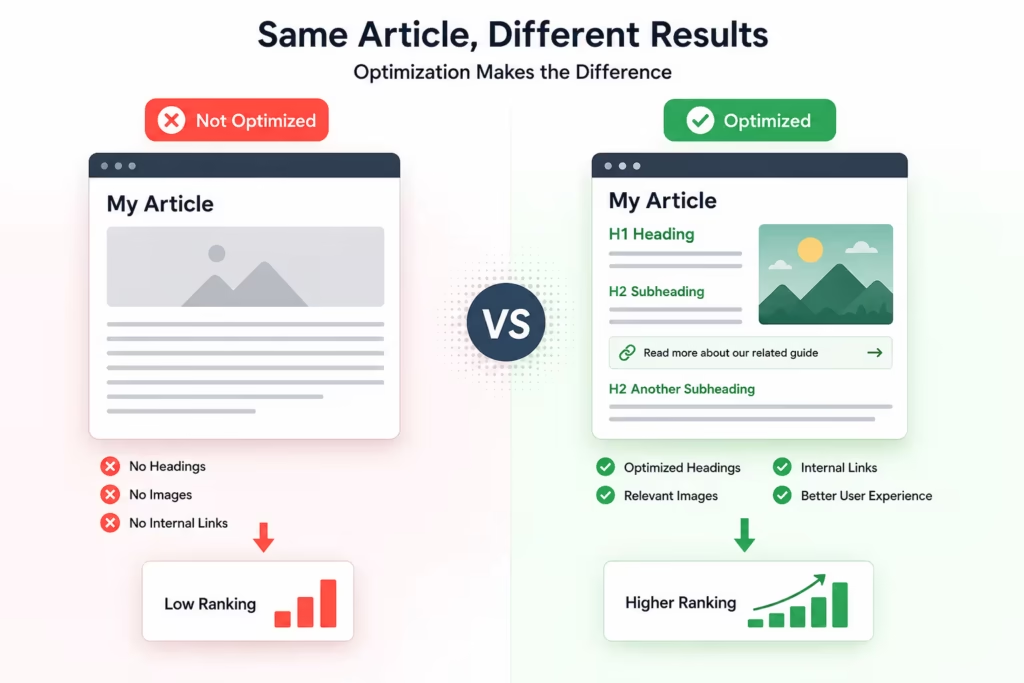
Two websites publish the same article, but the one with optimized headings, images, and internal links is more likely to rank higher.
4. What is a Meta Title Tag?
Answer:
A Title Tag is the clickable blue headline users see on Google Search results. It tells both users and search engines what the page is about. A good title should include the primary keyword naturally, stay under approximately 60 characters, and encourage users to click.
The title tag is one of the strongest On-Page SEO ranking signals.
Example:
Good Title:
Top 20 On-Page SEO Interview Questions for Beginners
Poor Title:
Home Page
5. What is a Meta Description?
Answer:
A Meta Description is a short summary of a webpage that appears below the title in search results. Although it is not a direct ranking factor, a compelling meta description improves Click-Through Rate (CTR), which can positively influence SEO performance. It should clearly explain what users can expect after clicking.
Example:
Learn the top 20 On-Page SEO interview questions with simple answers and examples to prepare for your first SEO interview.
6. What are Header Tags in SEO?
Answer:
Header tags (H1, H2, H3, H4, H5, and H6) are HTML tags used to organize content into a logical structure. They help search engines understand the hierarchy of your content while making it easier for users to scan and read the page. The H1 tag should contain the main topic of the page and should generally appear only once, while H2 and H3 tags are used for subheadings.
Using descriptive headings also improves accessibility and increases the chances of appearing in Google’s Featured Snippets.
Example:
For a page about SEO:
- H1: SEO Training Course
- H2: What is SEO?
- H2: Types of SEO
- H3: On-Page SEO
- H3: Off-Page SEO
Interview Tip: Mention that headings improve both user experience and search engine understanding.
Related Reading: If you’d like to learn SEO in detail, explore the SEO Training Course:
7. What is URL Optimization?
Answer:
URL Optimization means creating clean, descriptive, and user-friendly URLs that accurately represent the content of a webpage. A well-optimized URL should include the primary keyword, avoid unnecessary parameters, use hyphens instead of underscores, and remain as short as possible.
Search engines and users both prefer readable URLs because they clearly communicate the page topic before it’s opened.
Good URL
example.com/on-page-seo-interview-questions
Poor URL
example.com/page?id=456&category=seo
Example:
Instead of:
/article123
Use:
/seo-training-course
This immediately tells users and Google what the page is about.
8. What is Keyword Density?
Answer:
Keyword Density refers to how many times a keyword appears within a piece of content compared to the total number of words. Years ago, marketers tried to improve rankings by repeating keywords excessively, but modern search engines prioritize natural language and user intent over keyword repetition.
Today, it’s more important to write naturally and include related keywords, synonyms, and semantic terms rather than focusing on a specific percentage.
Example:
Bad:
Best SEO course is the best SEO course because our best SEO course teaches the best SEO course.
Good:
Our SEO course helps beginners understand keyword research, technical SEO, content optimization, and link building through practical projects.
Interview Tip: If asked about the ideal keyword density, say:
“There is no fixed percentage recommended by Google. The keyword should appear naturally without keyword stuffing.”
9. What are Internal Links?
Answer:
Internal links connect one page of a website to another page on the same website. They help search engines discover pages, distribute authority across the website, and improve website navigation. Internal linking also encourages visitors to spend more time exploring related content.
A strong internal linking strategy is an important part of On-Page SEO because it helps both users and search engines understand relationships between pages.
Example:
If you’re reading an article about SEO interview questions, you could naturally link readers to:
These links provide additional value instead of forcing users to search manually.
Interview Tip: Mention that internal links also help Google crawl important pages faster.
10. What are External Links?
Answer:
External links are hyperlinks that point from your website to another website. They are often used to reference trustworthy sources, statistics, government websites, or industry research. Linking to high-quality and relevant websites improves the credibility of your content.
However, external links should always be relevant and useful for readers. Avoid linking to low-quality or spammy websites.
Example:
If you’re writing about search engine optimization, linking to Google’s Search Central documentation would be considered a good external reference because it comes directly from Google.
Interview Tip: Explain that external links don’t directly improve rankings, but they increase trust, provide additional context, and enhance the user experience.
11. What is Image Optimization?
Answer:
Image optimization is the process of reducing an image’s file size while maintaining its quality. It helps webpages load faster, improves user experience, and increases the chances of appearing in Google Image Search. Best practices include compressing images, using descriptive file names, choosing the right format, and adding alt text.
Example:
Instead of uploading IMG_001.jpg, rename it to on-page-seo-guide.jpg before uploading.
You can also read our blog What is Mobile SEO and Its Importance to understand how optimized images improve mobile performance:
12. What is Alt Text?
Answer:
Alt text (Alternative Text) is a short description added to an image that helps search engines understand its content. It also improves accessibility for visually impaired users who rely on screen readers. A good alt text should clearly describe the image without stuffing keywords.
To understand how SEO and website design work together, read our blog Web Design and Digital Marketing You can also explore our Website Development Course
Example:
Instead of writing image1, use Student learning On-Page SEO in a classroom.
13. What is Keyword Cannibalization?
Answer:
Keyword cannibalization happens when two or more pages on the same website target the same keyword. This confuses search engines about which page should rank, often reducing the visibility of all competing pages. Each page should target a unique primary keyword.
Learning proper keyword research helps avoid this issue. Read our guide on Google Ads Keyword Planner You can also practice keyword research in our Google Ads Course
Example:
Creating two articles targeting “SEO Course in Mohali” may cause both pages to compete with each other.
14. What are Canonical Tags?
Answer:
A canonical tag tells search engines which version of a webpage should be treated as the original. It helps prevent duplicate content issues when similar pages exist on a website. This ensures that ranking signals are passed to the preferred page.
Canonical tags are covered in our SEO Training Course
Example:
If the same product page is available through multiple URLs, a canonical tag tells Google which one should rank.
15. What is Duplicate Content?
Answer:
Duplicate content refers to identical or very similar content appearing on multiple pages. It can confuse search engines and reduce the chances of ranking well. Writing original content and using canonical tags helps avoid this issue.
Example:
Copying the same service description across multiple city pages without changes can create duplicate content.
16. What is Schema Markup?
Answer:
Schema Markup is a type of structured data added to a webpage that helps search engines better understand its content. It can improve how your page appears in search results by displaying rich snippets such as ratings, FAQs, reviews, and breadcrumbs. While Schema Markup is not a direct ranking factor, it can increase click-through rates.
Example:
A recipe page with Schema Markup may display cooking time, ratings, and reviews directly in Google’s search results.
Read complete post here: Step by step Guide to implement Schema Markup on WordPress
17. What is Page Experience?
Answer:
Page Experience refers to how users feel when interacting with a webpage. Google considers factors such as page speed, mobile-friendliness, HTTPS security, and ease of navigation when evaluating page experience. A better experience helps keep visitors engaged and can improve search performance.
Example:
A fast-loading, mobile-friendly website with clear navigation provides a better page experience than a slow website filled with pop-ups.
18. What are Core Web Vitals?
Answer:
Core Web Vitals are Google’s metrics for measuring a webpage’s loading speed, responsiveness, and visual stability. The three main metrics are Largest Contentful Paint (LCP), Interaction to Next Paint (INP), and Cumulative Layout Shift (CLS). Improving these metrics creates a better user experience.
Example:
If a webpage loads within two seconds and the content doesn’t shift while loading, it is more likely to provide a good user experience.
19. What is Local SEO?
Answer:
Local SEO is the process of optimizing a business to appear in location-based search results, such as Google Maps and “near me” searches. It involves optimizing your Google Business Profile, collecting customer reviews, using local keywords, and maintaining consistent business information across the web. Local SEO is especially important for businesses serving a specific city or region.
Example:
When someone searches for “SEO institute near me“, Google displays nearby businesses based on their location and relevance.
Here you can read complete guide on local SEO: Complete Local SEO Guide: Beginner to Advanced
20. What are the Most Important On-Page SEO Ranking Factors?
Answer:
Some of the most important On-Page SEO ranking factors include high-quality content, optimized title tags, proper heading structure, keyword placement, internal linking, image optimization, mobile-friendliness, page speed, and a positive user experience.
These elements help search engines understand your content and improve its visibility in search results. Focusing on these fundamentals can significantly improve a webpage’s performance.
You can also continue learning through this guide: Career Options in Digital Marketing
Example:
A webpage with useful content, fast loading speed, optimized headings, and relevant internal links is more likely to rank higher than a poorly optimized page.
Conclusion: Preparing for an SEO interview doesn’t have to be overwhelming. By understanding these 20 essential On-Page SEO interview questions, you’ll be able to explain key concepts with confidence and demonstrate your knowledge to potential employers.
Remember, companies hiring freshers are more interested in your understanding of SEO fundamentals, your willingness to learn, and your ability to apply concepts in real-world situations than in knowing every advanced technique.
To improve your chances of getting hired, don’t just memorize these answers, practice optimizing websites, writing SEO-friendly content, and using industry tools like Google Search Console, Google Analytics, and keyword research tools. Building hands-on experience through personal projects or internships will make your interview responses much stronger.
If you’re serious about building a successful career in SEO or digital marketing, consider joining our SEO Training Course in Mohali or Diploma in Digital Marketing in Mohali
Our industry-focused training in institute includes live projects, practical assignments, AI-powered SEO strategies, interview preparation, and placement assistance to help you become job-ready.
Looking to continue learning? Explore more expert guides on the Digital Discovery Institute Blog and stay updated with the latest SEO trends, Google algorithm updates, and digital marketing strategies.
We wish you the very best in your SEO interview and your journey toward becoming a successful SEO professional!