You’ve probably heard the stat that email marketing delivers an average ROI of ₹3,600 for every ₹100 spent — and yet, most businesses in India either don’t have an email list, or they have one collecting dust because they don’t know how to use it properly. Here’s the honest truth: social media reaches your audience only when the algorithm allows it. Email reaches them directly, every single time — no feed, no pay-to-play. Whether you’re a student looking to add a high-value skill to your portfolio, a working professional wanting to upskill, or a budding freelancer building a client base — understanding how to build an email list and run campaigns is one of the smartest moves you can make in 2025. This guide covers everything: from growing your subscriber base from zero to crafting campaigns that actually convert.
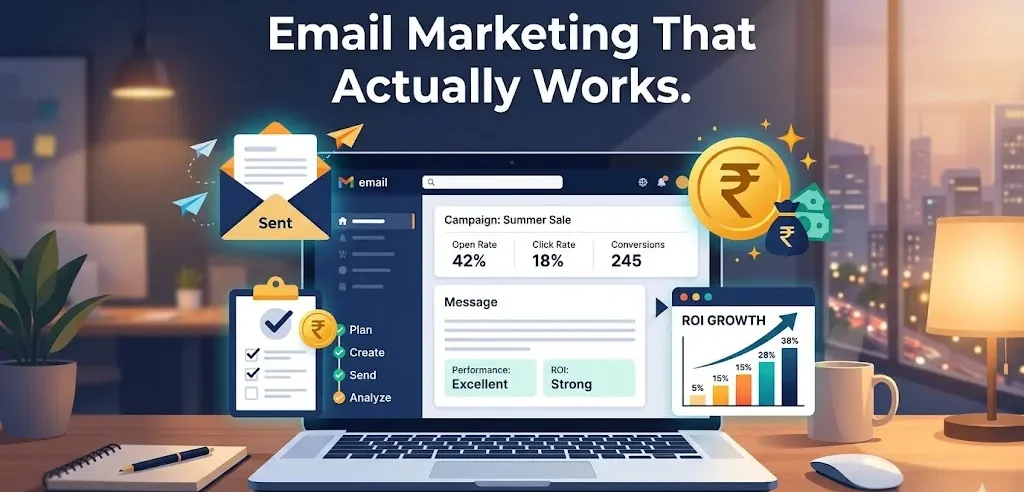
Table of Contents
- What Is Email Marketing and Why Does It Still Work?
- How to Build an Email List from Scratch
- Choosing the Right Email Marketing Platform
- Writing Emails That People Actually Open and Click
- Types of Email Campaigns You Should Know
- Email Automation — Work Smarter, Not Harder
- How to Measure Email Campaign Performance
- Common Email Marketing Mistakes to Avoid
- Conclusion
- FAQ’s
What is email marketing and why is still effective nowadays?
The act of sending personalized, permission-based emails to a subscriber list to build a relationship, provide value, and elicit response—such as purchase, sign up or just keeping it top of mind.
Why Email Outperforms Most Channels
Let’s be direct. Email is not out, it is coming of age, as there are more than 4.3 lakh users of emails in the world and India has already surpassed the mark of 5 crore. Why it is still beating the pants on the backs of all others today:
- The ownership: Your email list is your list, not Instagram followers or Facebook fans. There’s no algorithm that can instantly bring down your reach.
- Those who are on your list have told you that they want to hear from you. That’s more of an audience that an advertisement can buy.
- Versatility: Email can be used throughout the funnel stages— Awareness, Consideration, Conversion and Retention.
- Cost-efficiency: Platforms like Mailchimp and Brevo have free levels for small lists so this is one of the most accessible channels for beginners to use.
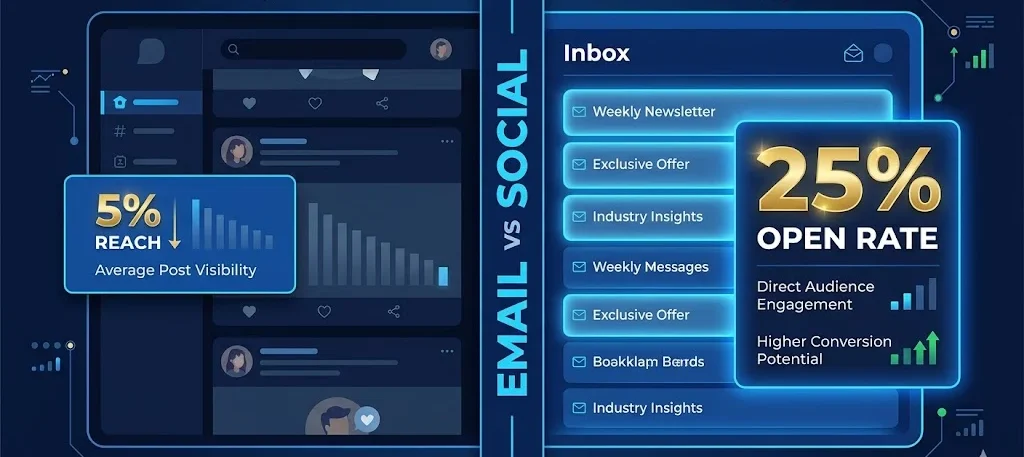
There are two main things to keep in mind between email marketing and social media. Here is a quick reality check of the two main things to keep in mind:
Too often, however, many marketers—particularly the novice marketers— devote all their energy to social media marketing and leave e-mail marketing as an afterthought. However, here is something to think about: An average Facebook post achieves only less than 5% organic reach and a well-designed email has an open rate between 20-30%. This is a 4-6x difference in reach, at no cost.
Email is also a channel in perfect harmony. The feedback you can get from these campaigns can be used to guide and shape your Google Ads course targeting, your content and your retargeting audiences. It’s not a binary choice, it is the joining tissue of a clever digital marketing strategy.
🎯 Eager to learn how to master email marketing while getting hands-on practice with a campaign? For more information on e-mail marketing training please visit https://digitaldiscovery.institute/email-marketing-course.php — NOT slides!
How to Build an Email List from Scratch
This is where most beginners fall by giving into the curiosity trap, as list building isn’t a complicated process, it’s simply a matter of provoking people to subscribe to the list, because they have a good reason for doing so.
The Lead Magnet — Your #1 List-Building Tool
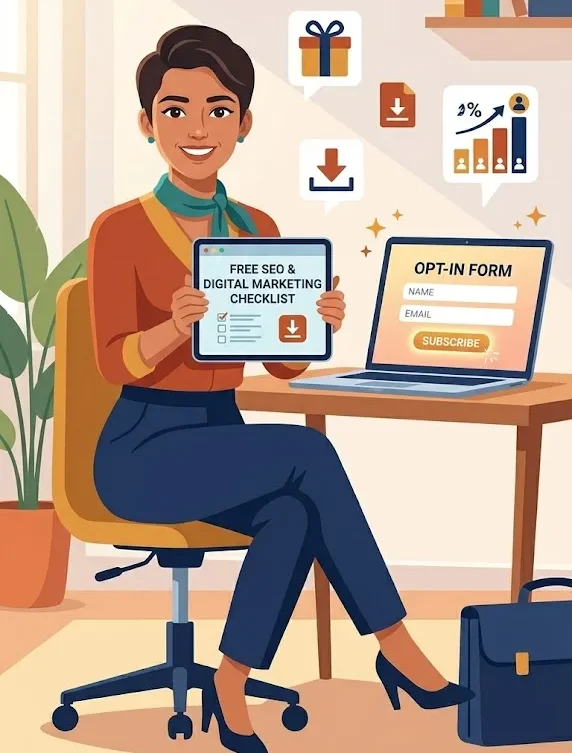
A lead magnet is anything free that you give away in exchange for a person’s email address. The better your lead magnet, the more the list will grow. The following are great lead magnets:
- Checklists are item lists that can include several items (e.g., “30-Point Digital Marketing Checklist for Beginners”).
- E-books or mini-guides (such as “Freelance Digital Marketing Starter Kit”).
- Free templates (such email campaign calendar template). Download our free SEO audit checklist – 47 things to check before you publish.
- Access to webinar/ workshops
- Examples of discount codes (e-commerce brands)
The focus is on specifics. Newsletters are not a “lead magnet.” “Download our free SEO audit checklist – 47 things to check before you publish” is.
This is where to place your opt-in forms.
After having a lead magnet, placement counts hugely:
- Placing it at the homepage hero section, where a good amount of web traffic flows.
- Blog posts – at the bottom of each blog post and at the end of each article (like this one)
- Popups generated when visitors are moving away;
- Landing pages — special page designed for just one purpose — to get email address
- Social media bios – link to a landing page from your Instagram or LinkedIn bios
Establishes trust prior to the opt-in.
No one hands over his or her e-mail address to a website that he or she does not trust. If you want to know the answer, then first build a reputation by publishing quality content. The guide to the types of digital marketing illustrates the collaboration between content marketing and e-mail marketing.
Selecting the Proper e mail Mailing List Software
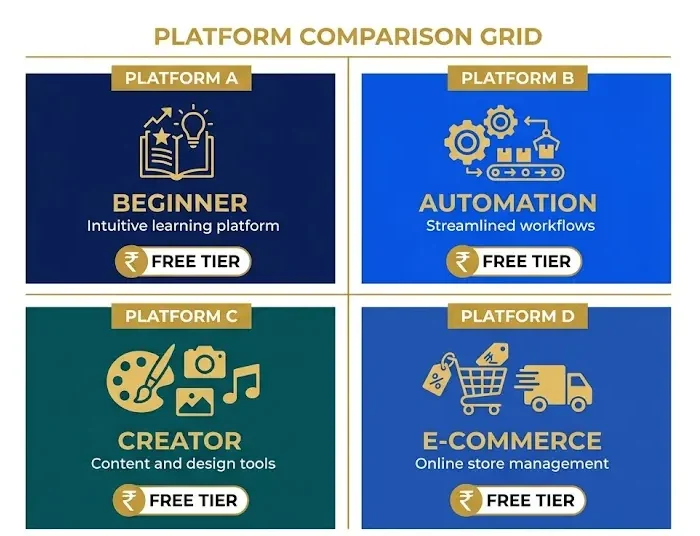
Your decision on which tool to use can impact the automation options you have, audience segmentation, and how the emails will look on different devices. These are the most popular solution providers:
Tool | Best For | Free Tier |
Mailchimp | Beginners, small businesses | Up to 500 contacts |
Brevo (formerly Sendinblue) | Automation + SMS combo | 300 emails/day |
ConvertKit | Bloggers, creators, freelancers | Up to 1,000 subscribers |
Klaviyo | E-commerce brands | Up to 250 contacts |
HubSpot | B2B, CRM integration | Limited free tier |
What to Look For in a Platform
- The drag-and-drop feature of the email builder tool saves time — no coding required.
- List segmentation – capability to segment lists by behaviour, location or interest
- Send emails based on actions (purchases, link clicks, sign-up etc.).
- Reading analytics — opened / clicked / unsubscribes
- Deliverability pop — the platform’s capability to get e-mail right into the email inbox as a substitute of spam labels
For newbies, either Mailchimp or Brevo is a good beginning point. However, Klaviyo or ConvertKit can be worthwhile when you start introducing some iteration for larger lists and more complex funnels. Email marketing training here at DDI also allows you to practice using industry-leading tools to ensure you are ready to land a job once you start your new career!
So how to make emails that they will open and click on?
The 70% of great email marketing is copywriting. So, how can you have both right?
Your Make-or-break Moment
Your email is destined to live inside your Trash or not live at all, depending on the attention that you give your subject line. Best practices:
- Limit subject lines to under 50 characters – most cell phone screens truncate the Subject Line in a message.
- Leverage curiosity gaps: “You’re doing this one wrong in your email…”
- Be specific: 3 email templates that secured a 42% open rate
- Personalize as much as possible: “[First name] your FREE checklist is here”.
- Try not to use words or phrases that are considered spam words: FREE!!!, GUARANTEED, Click Here, Act Now
The Preview Text — Optimization Text, which is Very Good, but Not Normally Read.
The amount of free space most senders waste in their inbox is the preview text – the gray text that appears beside the subject line. If it’s to add to subject, don’t duplicate it.
Email Body — Structure That Converts
- One message, one won goal. Limit the number of CTA’s to 1 – don’t ask readers to do five things.
- Write like a human. People should hear your e-mail as coming from a real person, rather than a brand committee.
- Short paragraphs. Three sentences maximum. White space is your friend.
- Effective call-to-action button. Always, always, always use the “Download the guide” button over the “Click here” button.
The same rules of clear and convincing organization are applied to writing content generally — clarity, specificity and putting the reader first carry through every type of writing.
See Our Digital Marketing Diploma: https://digitaldiscovery.institute/diploma-in-digital-marketing.php
There are a number of different types of Email Campaigns that you should know
Not every e-mail message is meant to serve the same purpose. A comprehensive email marketing strategy incorporates different types of emails that correspond to different points in the customer journey.
Welcome Sequence
The very first e-mail that a new subscriber receives. This is your best open rate email, usually 50-70% due to being at peak interest. Use it to provide the lead magnet, introduce your brand and raise expectations.
Newsletter
A regular communication (weekly or fortnightly) that brings them some value – tips, insight, heeled material or status update. The idea is to get your name into their minds and establish trust over time. It is less about do all the work in the sales process may be a lot more around the consistent presence.
Promotional / Sales Emails
Limited-time promotions, course openings, or product ups, etc. These are the best revenue emails — when they’re right — and worst emails — when they’re too much. Use hard-sell emails no more than 20% of all your emails.
Re-engagement Campaigns
Delivered to the subscribers who do not open your e-mails for 60-90 days. You may be surprised to reach a surprising number of “sleeping” subscribers with a suggestive but not threatening subject line, such as: “Are we breaking up?”.
Transactional Emails
Cards that are opened more than any type of email are order confirmations, course enrolment confirmations and password resets thanks to user action. They are also a missed opportunity for cross-selling and/or up selling. These are part of a larger performance marketing course plan and our students explore this with hands-on projects.
Email Automation — Work Smarter, Not Harder
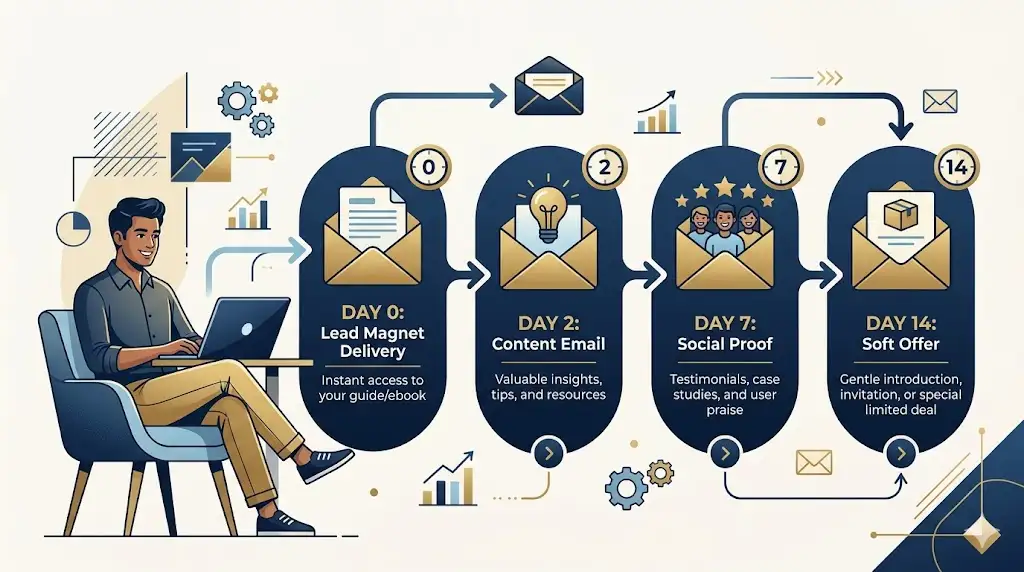
What sets apart the hack email marketers from the professionals is automation. It will enable you to select the correct email for the right recipient at the opportune time… without touching a single button.
In this article, you’ll find key automation workflows that every marketer should create.
- Provide testimonial blocks (3–5 – 7–10 days) Day 0: Give lead magnet + inform how you create a soft offer Day 2: Share your best content Day 5: Build Social Proof (Student Results, Testimonials) Day 7: Make a soft offer
If they visit your course page / pricing page without taking the action, they will be recovered within 1-2 hrs via an automated follow-up. Educational Institutes can particularly use this to great effect.
- Post Purchase / Post Enrolment Sequence Post Onboarding new customers / new school/ student — structured sequence: What they can expect, how to get started, who to contact etc. will lessen dropouts and increase their satisfaction.
- Cold Lead Drip A longer drip campaign (2-4 weeks) for leads that are not ready to purchase. Teach them lessons and earn their confidence; care for them so they will follow their own decision.
The process of creating such automations is one of the key aspects of the digital marketing course in Mohali at DDI and students not only read about automations but are trained to build complete workflows.
To measure the performance of an email campaign, these are the key metrics you should monitor
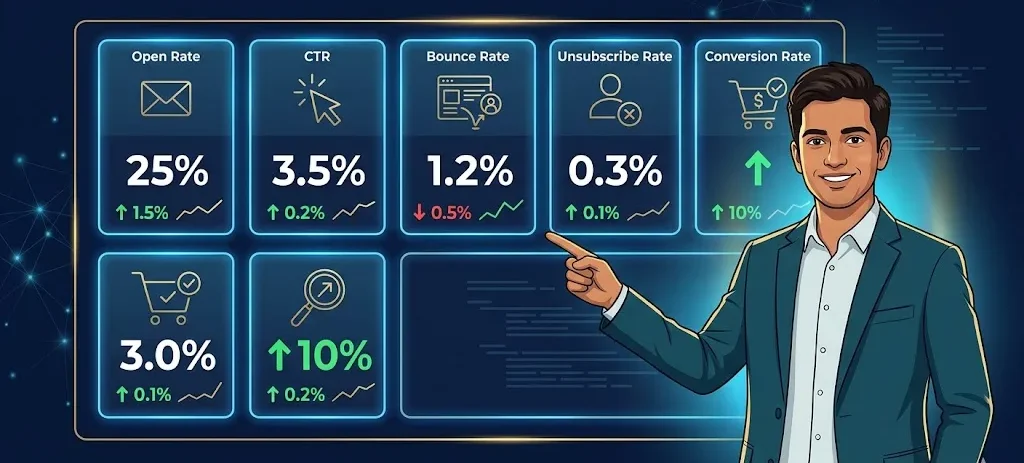
If you’re not measuring, you’re not marketing — you’re guessing. These are the measurements that count:
Core Email Metrics
Metric | What It Measures | Benchmark (India) |
Open Rate | The percentage of recipients who opened the e-mail message. | 20–30% |
Click-Through Rate (CTR) | % who clicked on the link on his/her page | 2–5% |
Click-to-Open Rate (CTOR) | CTR ÷ Open Rate | 10–20% |
Bounce Rate | The percentage of e-mails that were not delivered is % | Below 2% |
Unsubscribe Rate | % who opted out | Below 0.5% |
Conversion Rate | This represents % of those who took the desired action. | Varies by goal |
Increase your metrics:
- If you don’t have a high open rate, try different subject lines, try different times, or try a different sender’s name.
- If your CTR is low, revamp your CTA copy, streamline the process and do some mobile rendering testing.
- Too many emails have been sent = You are sending emails either too often or content that is irrelevant.
- Low bounce rate → Maintain a clean list; get rid of invalid and inactive addresses
When you add emails to your Google Analytics training tracking, you’re not just tracking what happens after the click, but everything that happens after it.
Avoiding these common email marketing mistakes is essential for building a successful email marketing campaign.
These are common pitfalls every marketer can fall into!
- DO NOT EMAILIST COULD NOT PLEASED BY THE OWNER. NEVER BUY EMAILLIST — DOES NOT PLEASE THE OWNER. A bought list destroys deliverability, breaks GDPR / India DPDP Act and yields no results. All subscribers are to be opted in willingly.
- Sending without segmentation — Sending the same emailed message to your entire list is ignoring that everyone has unique needs. Average open rates are 14% higher with segmented campaigns.
- Not optimizing for mobile — Indians are more than 60% mobile users and are opening emails on mobile. When a person accessing your email from a 6-inch screen doesn’t read it properly, you’ve already lost half the audience before they read a single word!
- Invariably sending frequency — If you send emails occasionally then suddenly five in a calendar week, you will definitely be getting more unsubscribers. Choose a tempo and follow it.
- Some of the email software does not display HTML. Ensure that there is a simple text alternative (“fallback”).
- Don’t forget to take care of the disconnect experience. Better than complaints of spam that will severely hurt your sender reputation.
You can gain insight to the use of email as a vital component of a comprehensive digital marketing strategy by reading our detailed guide to how freelance digital marketers in India use email to find and keep clients by themselves.
Conclusion
Email marketing is one of the few channels where you have an audience of your own, have a message of your own, and know exactly how it performed, down to the rupee. While tools have evolved over time, the fundamentals such as a quality lead-magnet, a trustworthy sender reputation, well-written copy and smart level automation remain the same. There’s no secret knowledge between professionals and hobbyists — structured work on authentic campaigns and actual known data.
Our email marketing training at DDI Mohali takes the approach of making content, live tool walk-throughs, actual automation builds, campaign audits from actual metrics exactly that! From adding email to your repertoire, to becoming a digital marketer, to cultivating a freelance clientele — the inbox is one of the most influential places you can be. Begin adding to your list now. Your audience is already Googling for you.
🎯 All set to go with Real Email Campaigns? Get trained at DDI Mohali. What you will gain includes real-world experience managing mailchimp, brevo and drip campaigns on a day-to-day basis with agency clients, connecting with trainers who have daily experience evaluating strategies and tactics, a grasp on the latest converting campaigns, and a hands-on practical application of them.
FAQs
What is email marketing? How does it work with people new to it?
Email marketing involves making business connections and provoking conversions such as purchases or enrollments by sending permission-based and targeted emails to a subscribers list. You’ll gather emails by making opt-in forms using a lead magnet and then create, design, send and track your email through a platform such as Mailchimp. It is also one of the most accessible digital marketing avenues, as there are many free tools available, and you can immediately measure the results.
How to build an email list from 0?
Whatever you do, the first step should be to create a great lead magnet, like a free checklist, mini-guide, or template that’s relevant to your target audience. Next, embed the opt-in forms in your website, blog posts and your social media bio links. Bring visitors to these ‘opt-in’ spots with natural content, social media posts, or advertising. Be consistent: 10-20 new people sign up each week is a big membership in a few months.
For someone new to email marketing in India, which is the best free email marketing tool?
The most popular free emails are Mailchimp and Brevo (formerly Sendinblue). Mailchimp offers a free plan that lets you send up to 500 emails, but Brevo offers a free plan with only 300 emails per day. They both have drag and drop builders, basic automation features and analytics, which is sufficient to start and to learn the basics before investing in their paid plans.
How do you know if your email camp is performing good? What is a safe open rate in an email campaign in India?
In India, the industry standard for open rate in the average is 20-30%. These rates are dependent on different industries: For E-commerce brands, they range from 15–20%, and for B2B and Educational organizations, they fall in the range of 25–35%. If you are still struggling with being below 15%, review subject lines, sender name, and list hygiene!
Is DDI Mohali email marketing course offered in their courses?
Yes. Whether as a standalone module or a part of the comprehensive diploma in Digital Marketing at DDI Mohali, Email Marketing will be comprehensively covered. Students are not wasteful of time—they learn by doing, building lists, setting up a platform, crafting the copy for sending out by email, the automation process and what they can learn from campaigns, using industry tools not just theory.
What is email automation and why is it important?
Email Automation; It means that emails can be triggered by a certain activity, or automatic emails are sent out to a specific time and date, without any manual intervention. Let’s say, for instance, you have someone sign up to your list, your welcome sequence activates right away, offering the lead magnet, brand introduction, and nurturing the relationship over the next couple of days. Automation is about saving time, maintain consistency and reaching out to users in the right moment in their journey.
Is there scope for an Email Marketer Career in India?
Yes, indeed, it is growing. The agencies, D2C brands, edtech providers and SaaS firms are all in search of email marketing specialists. Freshers performing well in campaigns are eligible to get paid from ₹2.5L to ₹4.5LPA and the ones who can do automation in their email marketing work can ask for their salary from ₹8L to ₹14LPA. For a detailed breakdown of digital marketing job salaries in India, refer to our digital marketing salary guide by roles.
What is the optimum number of times to market my list?
Not everyone is the same, but a weekly newsletter will serve as a great starting point for most brands. What’s more significant is consistency, choose the schedule that you can maintain and stick to it. Excessive email sending (excess emails for little/no value) generates unsubscribes. An under-send (on a once in two months basis) results in subscribers forgetting you. Test and measure preferences and use engagement data to inform decisions.
So, what is the difference between a drip campaign and a newsletter?
A drip campaign is a block of automated emails that are pre-programmed and sent at a specific sequence – depending on a trigger such as class sign-up or download of a guide. The sequence is set and has to be repeated. Newsletters are regular notifications you send to the whole subscriber base (or subset) with new content or information. Newsletters continue the relationship building process, whereas drip campaigns work to nurture leads.
How can an email marketing training service assist you in finding employment at DDI Mohali?
DDI’s placement support involves Resume preparation, Mock interviews, and direct referrals to the 200+ hiring partners network, which comprises digital agencies in Chandigarh Tricity that actively look for Email marketing and marketing automation professionals for recruitment. A student who has finished a project portfolio in email marketing will always be known as a true marketer in an interview since he or she has been able to prove that with a real project.